
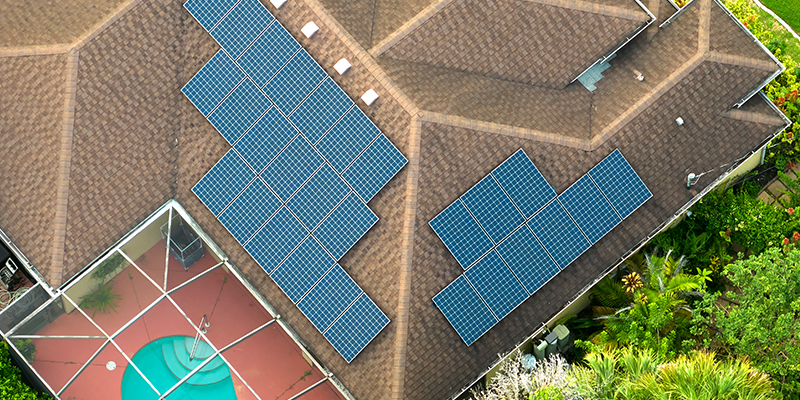
Here's the number Bay Area homeowners actually want: a typical residential solar system in the Bay Area costs about $20,000–$50,000 before any incentives, or roughly $2.50–$3.80 per watt installed. A battery adds about $9,000–$20,000 on top. The big change for 2026 is that the 30% federal residential solar tax credit expired at the end of 2025 — so the math looks different than it did a year ago, and how you finance and size the system matters more than ever. Here's the honest breakdown.
Pacific Edge Electric and Solar is a licensed C-10 electrical contractor (CA #1143455) in Los Gatos. We've designed and installed solar across the Bay Area since 2014, so these are real project ranges — not a national calculator's guess.
What solar costs in the Bay Area in 2026
| System | Typical installed cost | Notes |
|---|---|---|
| Residential solar (whole system) | $20,000–$50,000 | $2.50–$3.80/watt; size drives the total |
| Home battery (added) | $9,000–$20,000 | Per unit; more for multi-battery backup |
| Solar + one battery (common package) | $30,000–$60,000 | The typical NEM 3.0 setup today |
| Commercial solar | $2.00–$3.00/watt | Lower per-watt at scale |
Where you land depends mostly on system size (your electricity usage), roof complexity, and whether you add a battery. See our transparent pricing page for the full breakdown.
What the end of the federal tax credit means
Through 2025, homeowners could knock 30% off the cost of an owned solar system with the federal residential clean-energy credit. That credit expired for residential systems after December 31, 2025. On a $35,000 system that's about $10,500 that no longer comes back — a real change to the payback math.
It does not mean solar stopped making sense. Two things still drive the economics hard in the Bay Area: PG&E's rates remain among the highest in the country and keep climbing, and California's NEM 3.0 rules reward using your own power on-site. What it does mean is that right-sizing the system and financing it smartly now matter more than chasing an expiring incentive. (Businesses and non-profits have a different, still-active set of incentives — more on that on our commercial solar and non-profit solar pages.)
Why batteries changed the cost conversation
Under NEM 3.0 (the net-billing tariff for solar customers since April 2023), the credit you get for exporting power to the grid dropped roughly 75% versus the old NEM 2.0. So a solar-only system that dumps midday power to the grid for pennies isn't the deal it used to be. Pairing solar with a battery — storing your midday production and using it in the expensive evening hours instead of buying it back from PG&E — is now the key to a strong payback. That's why most Bay Area systems we design today include storage.
How to lower the real cost
- Size it to your usage, not your roof. An oversized system costs more and, under NEM 3.0, exports the excess for very little. Bring your last 12 months of PG&E bills so the system is sized to what you actually use.
- Use $0-down financing. Solar loans let the monthly payment land at or below your current electric bill, so you're cash-flow positive from month one even without the tax credit.
- Bundle the electrical work. If you also need a panel upgrade or an EV charger, doing it with the solar means one permit set and one crew — cheaper than three separate trips.
- Get real quotes, not gated ones. We publish our ranges up front and put the exact number in writing before any work starts.
Is solar still worth it in 2026?
For most Bay Area homeowners with a decent roof and a typical PG&E bill, yes — especially with a battery, because avoiding high-cost grid power in the evening is where the savings now live. The lifetime savings on a well-designed system still commonly land in the tens of thousands of dollars. The honest caveat: without the 30% credit, the payback period is a few years longer than it was in 2025, so the case is strongest for homeowners planning to stay in the home a while. Want the real numbers for your house? Request a free quote and we'll model it against your actual usage.
Frequently asked questions
How much does solar cost in the Bay Area in 2026?
A typical residential system runs $20,000–$50,000 installed ($2.50–$3.80 per watt), with a battery adding $9,000–$20,000. Your exact cost depends on system size, roof, and whether you add storage.
Is there still a solar tax credit in 2026?
The 30% federal residential clean-energy tax credit expired after December 31, 2025, so new homeowner-owned systems in 2026 don't receive it. Businesses and non-profits still have active federal incentives (including elective/direct pay for tax-exempt organizations). Always confirm current details with a tax professional.
Is solar still worth it without the tax credit?
For most Bay Area homes, yes — PG&E's high, rising rates and NEM 3.0's on-site-use incentive still make a well-sized solar-plus-battery system pay off, though the payback period is a few years longer than it was with the credit.
Do I need a battery with solar now?
You don't have to, but under NEM 3.0 a battery dramatically improves the economics by letting you use your own stored power during expensive evening hours instead of exporting it cheaply. Most systems we design in 2026 include storage for that reason.
Ranges are typical Bay Area planning figures; your exact cost is quoted in writing before work begins. Incentive details change — confirm current federal and California programs with a qualified tax professional. Written by Adam Aksoy, licensed C-10 electrical contractor (CA #1143455), Pacific Edge Electric and Solar.